Interview
Mary O’Connor: Into the Wild
Mary O’Connor (she/her) is a Chicago-based artist, printmaker, and educator. She recently earned her Masters of Fine Arts from Northern Illinois University in the spring of 2026. She was an Aunspaugh Fellow (2022-2023) at the University of Virginia from where she received her Bachelor’s degree. O’Connor’s art practice is drawing centered with a focus in lithography. Her work uses ideas of fiction to disassemble the familiar into the strange as an exercise of imagination and as contrast to banality.
Artist Statement
My prints and drawings form in the space between real and imagined worlds. The imagination functions to see reality for what it is, for what it is not, and for what it can be. In my work, observations of ordinary life are deconstructed and reconfigured into fictional designs of rendered objects, machinery, and architecture. These inventions examine the role of creativity as our day-to-day is internalized and externalized into scenes of speculative futures and alternate realities. In the tradition of fiction, my artwork contrasts reality with abstract exaggerations to reflect on routines of daily life.
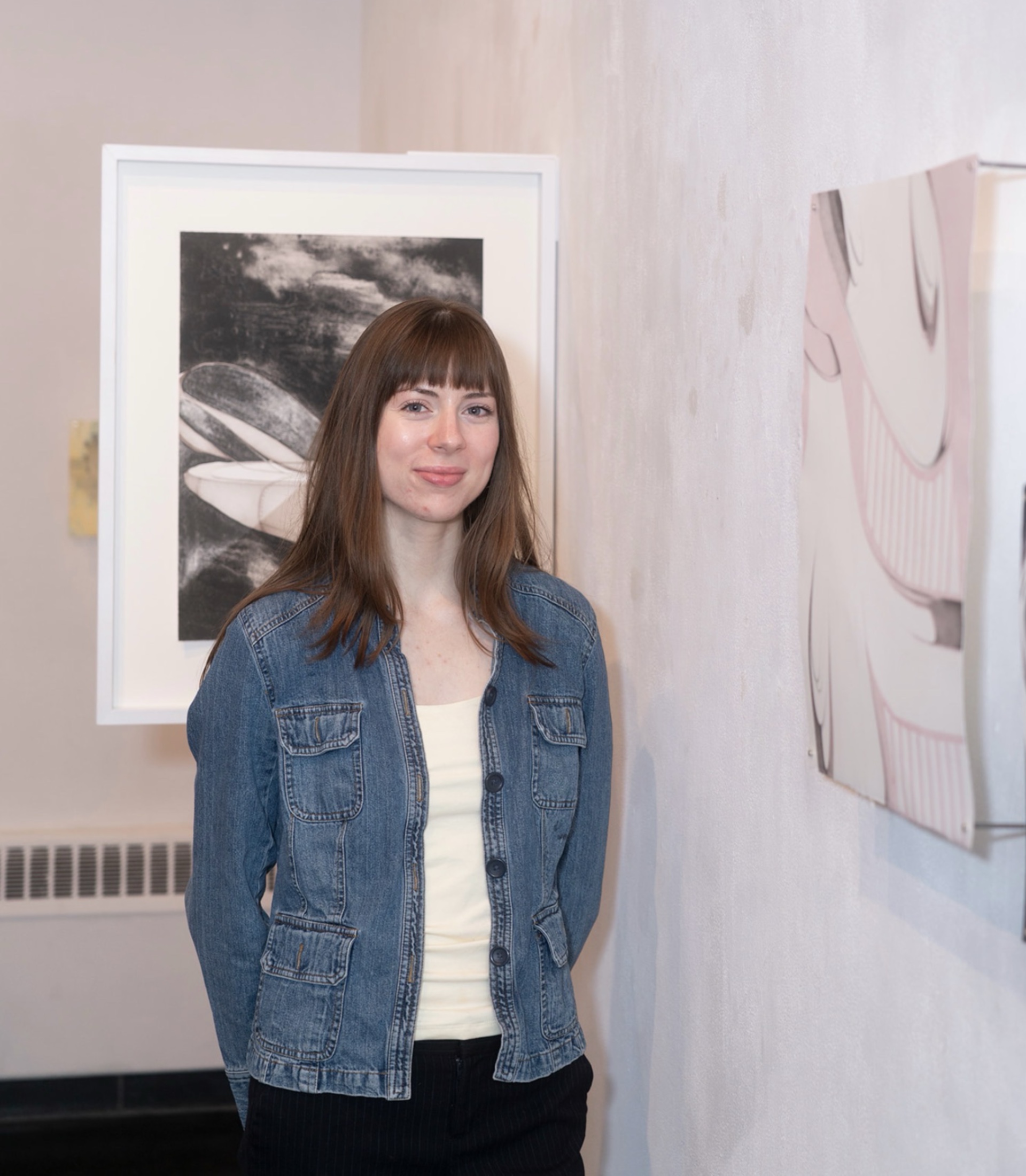
The Interview
Blake Sanders: When did you discover printmaking? Was it love at first sight or did you have to warm up to it?
Mary O’Connor: I discovered printmaking in my last year at the University of Virginia. I was encouraged by a professor to sign up for a print class. It was Intro to Lithography and Relief. On the first day, we put metal to rock and started graining stones. And from there, it was game over. The technical qualities of the medium were compatible with how I understood and processed the world and art. It was slow and layered, but also full of surprise and awe. I just fell in love with the labor and the magic of lithography.
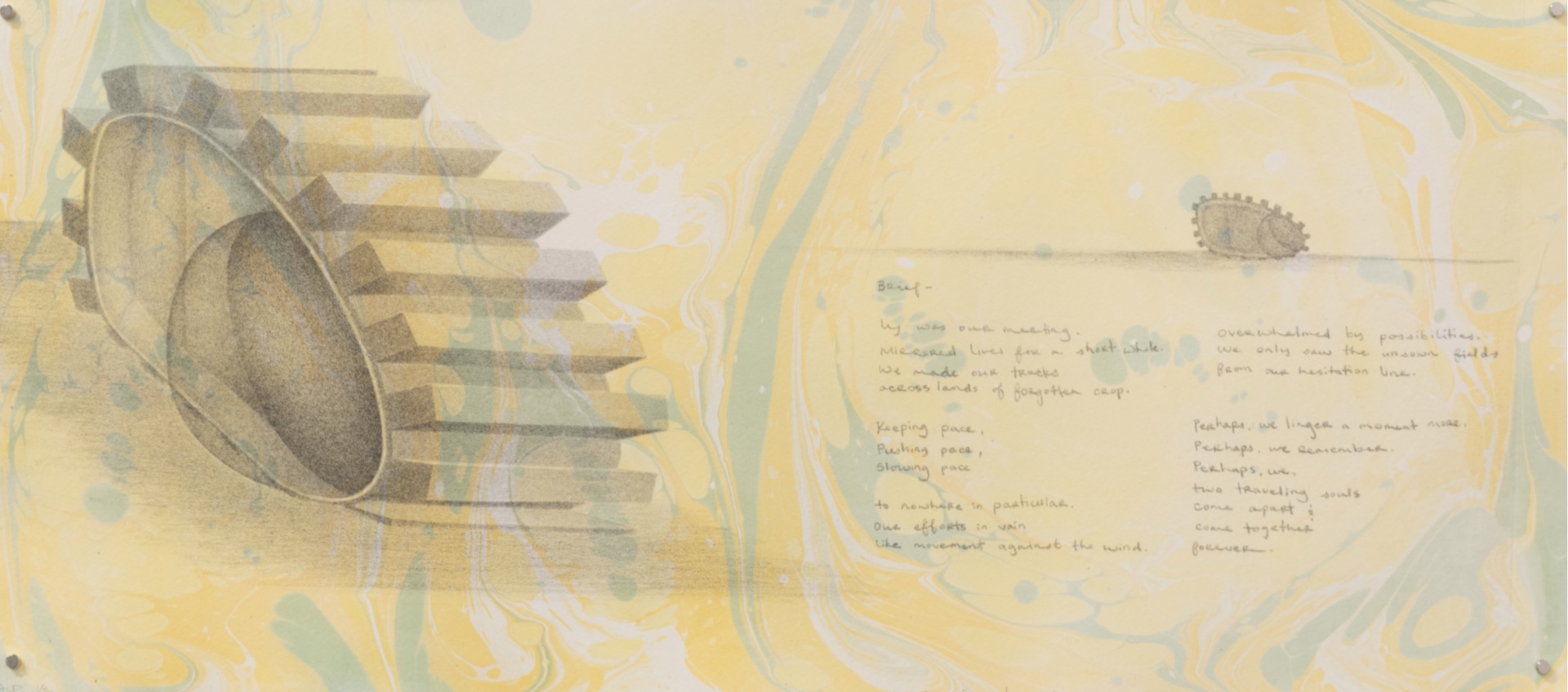
Vehicles for Lone Travelers
Lithography on marbled paper
11″x22″
2025
BS: You began your academic career at Virginia Peninsula Community College before transferring to University of Virginia for your BA. Was the University always in your plan? Was art? How did your studies at the Community College influence your work and shape your path at the university?
MO: Community college was the plan after high school because I knew that I needed two things: education and time. I wanted/needed to continue general education, but with time to explore the different interests I had, figure out where and what to study next, and to save resources. The University of Virginia wasn’t on my radar until I visited friends going to school there. This trip was during my first year of community college. Its art department was small, but the facilities were impressive and the faculty was active and present. It was apparent that the students were brilliant and their developing ideas and art practice were well supported. That was important to me.
Art has always been very dear to me. While growing up, my grandmother taught me how to paint and draw on hot summer afternoons in her garage. Thanks to my grandmother, art became a necessary part of how I saw, explored, and expressed understandings of the world. It was inevitably going to be a part of my life in some way, but during community college, I made the decision to pursue it professionally. Community college was the first domino of many decisions.

To Pollinators
Lithography on marbled paper
14″x30″
2026
BS: You describe yourself as primarily a lithographer. What is it about that discipline that speaks to you? Are you a stone or plate specialist? How does the medium play into the content of your work?
MO: My art practice has always been drawing-centered. After the initial magic you feel after your first lithograph, it was the drawing that kept me coming back to the discipline. No other drawing surface quite compares to a polished slab of limestone. I’m mostly interested in stone lithography. My real technical interest lies in maximizing a drawing’s visual capacity through the properties of stone lithography. For example, I like using a stone’s ability to remember previous visual information and using techniques such as counteretching to modify and expand the aesthetic decisions of my drawings. I’ve been most fortunate to have access to litho stones throughout my studies… It will be interesting to see how graduation and limited access to resources will have an effect on my work.
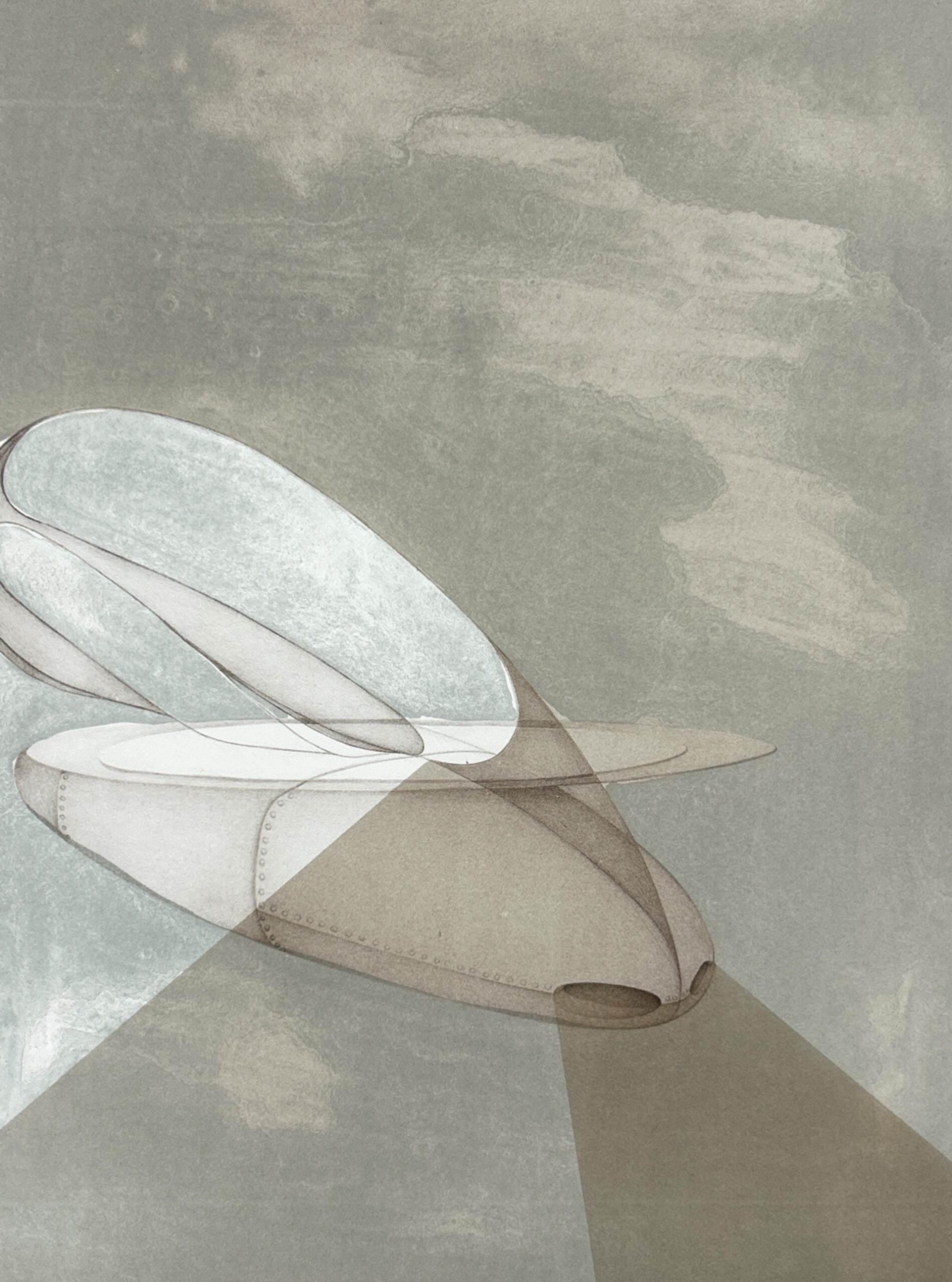
Driving with headlights
Lithography
20″x16″
2026
BS: You recently earned your MFA from Northern Illinois University. You got to see a bit of the history of that program on hand at Frogman’s this summer with a number of alums on hand. How did your experience at NIU prepare you for the start of your professional career?
MO: Northern Illinois University prepared me for life after school in many ways. Practically speaking, NIU gave me 3 years of professional work experience such as teaching and working in a print shop. NIU’s printmaking department also has a very strong community in its current students and alumni. The NIU representation at Frogman’s was a testament to that this summer. Within the extended NIU print family, there are many incredible examples of how one can pursue art professionally – teaching, community building, entrepreneurship. I’m very lucky to have their example because it’s expanded and eased my definition of success and profession when it comes to the art world. And though I’ve only recently graduated from school, the relationships have already carried over and continue to grow. Most importantly, at NIU, my studies with Michael Barnes and Maven Kennedy were a printmaking education like no other. Between the two of them, they had a love and an appreciation for art that was infectious, joyful, and curious. I left school excited and ready to continue making and sharing art.
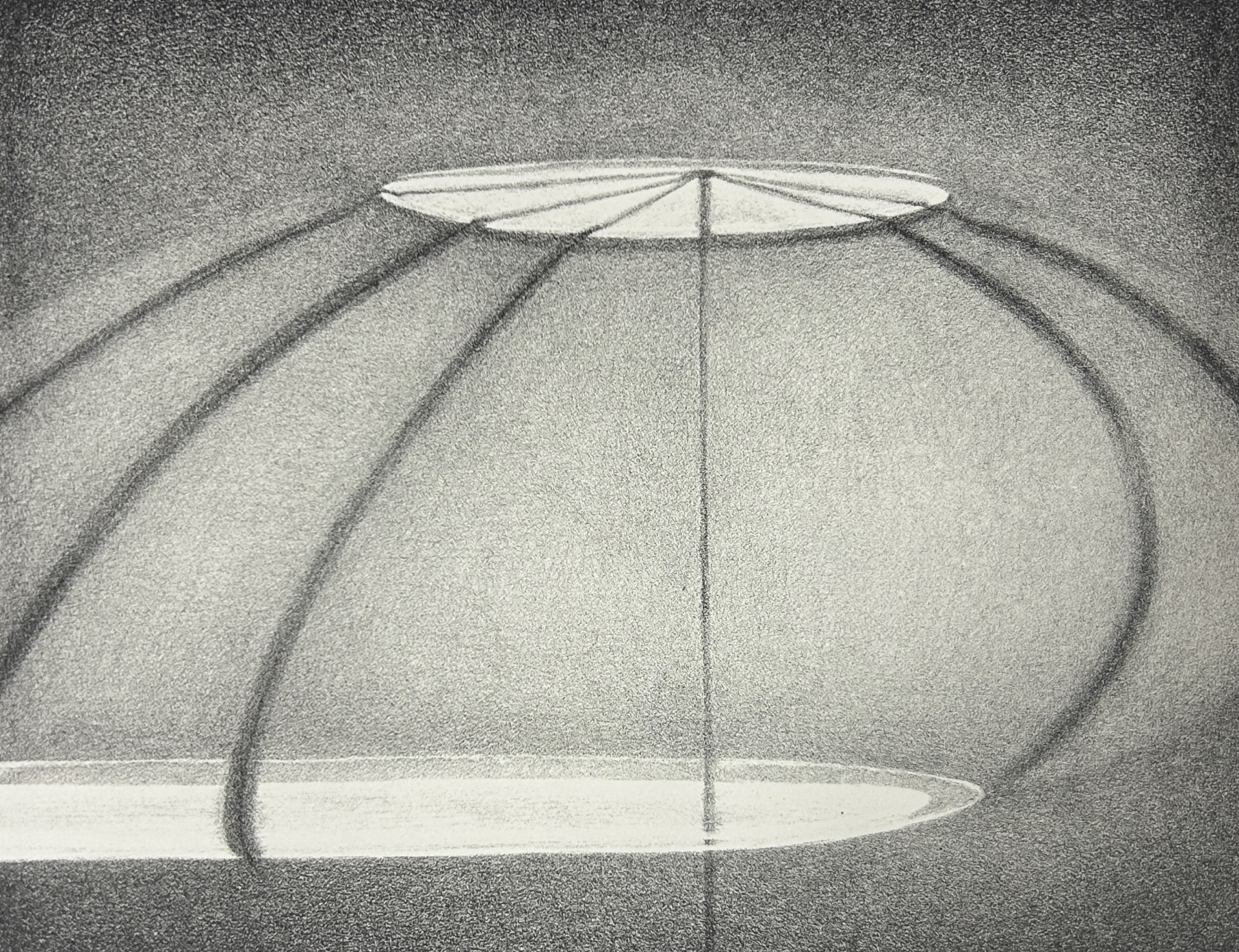
Incubator
Lithography
6″x7″
2026
BS: You were the graduate fellow recipient at Frogman’s this year. Your exhibition featured lithographs, many which were projecting from the wall as double sided pieces. How does the method of presentation relate to the exploration of reality in your work?
MO: Most of my work is about exercising the imagination in our daily lives, and creating intentional moments where imagination can be encountered. My show at Frogman’s featured a set of hinged frames that protrude off the wall. These frames either face one another or other artwork. The idea (the hope) for these frames was to activate the surrounding area. To have the viewer physically enter the space between prints and experience pocket worlds of meaning based on the prints that are paired together. I believe that encounters with fantasies and fictions estrange us from monotony and banality, so the frames were made to support the fantasy and the liminal space that is in the imagery itself.
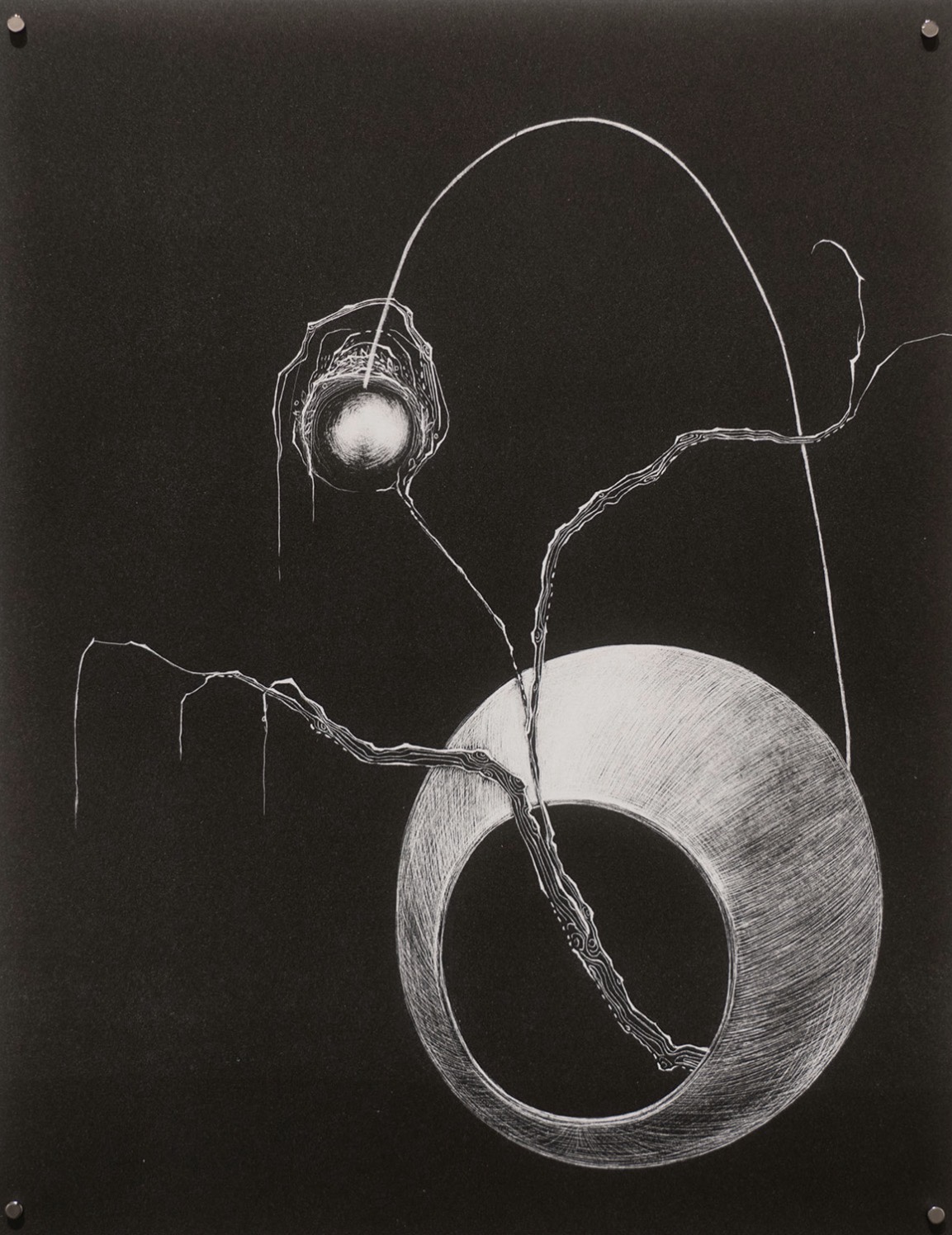
Phototropism
Reductive lithography
14″x11″
2025