Interview
Nose to the Ground Stone: A Conversation With Brian Kelly
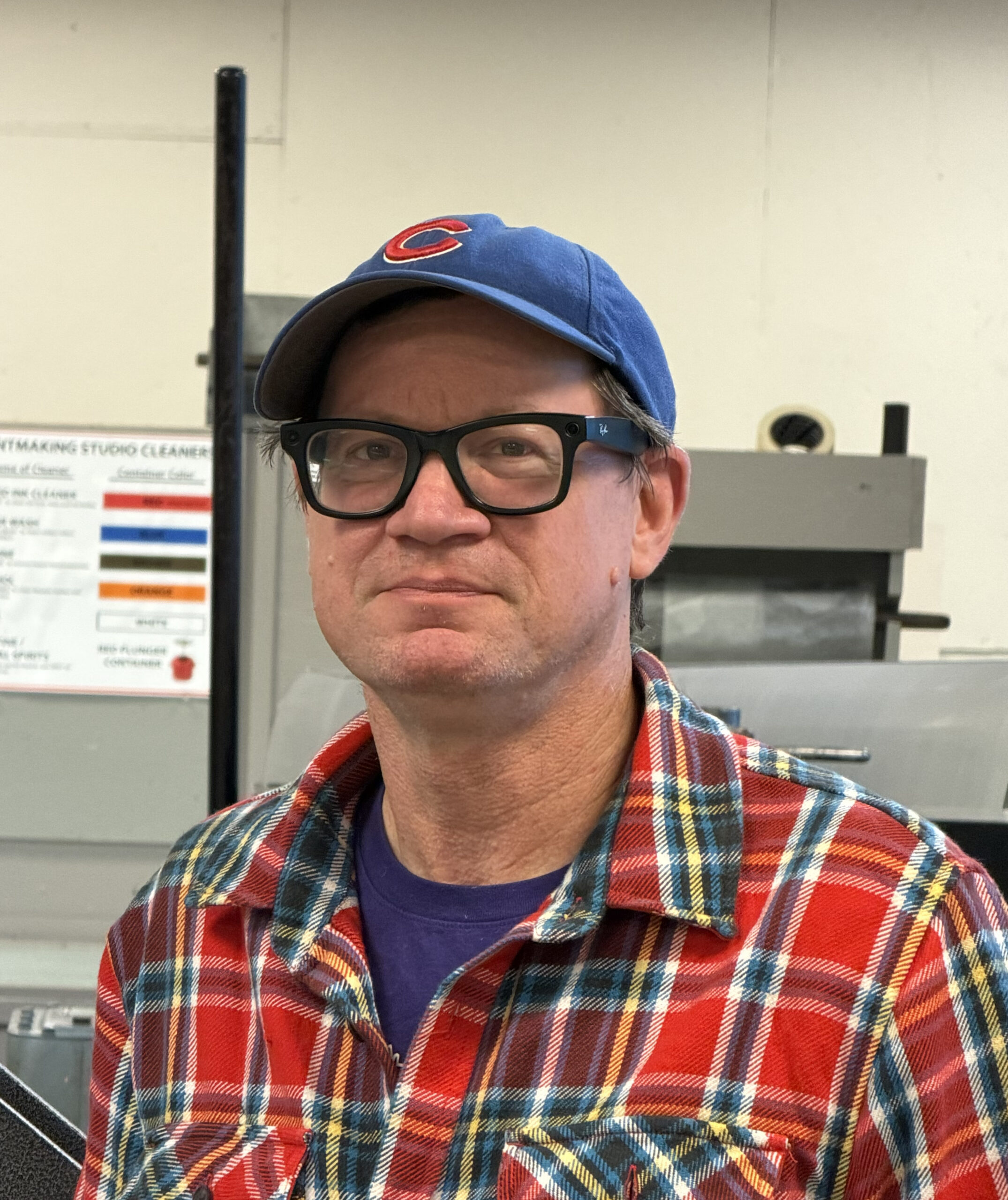
Brian Kelly received an M.F.A. in Printmaking at Louisiana State University (1995), a B.F.A. in Printmaking from Northern Illinois University (1992), and a Certificate in Waterless Lithography from Tamarind Institute of Art (1996). Professor Kelly serves as Head of the Printmaking program and is Coordinator of Marais Press at the University of Louisiana at Lafayette. Kelly holds the Universities Coca Cola/BORSF Endowed Professorship and has been recognized as a University of Louisiana at Lafayette University Distinguished Professor, and a UL Lafayette Eminent Faculty for Leadership and Service, has received the Dr. Ray P. Authement Excellence in Teaching Award, and received the UL Outstanding Undergraduate Research Mentor Award three times.
Kelly has presented and conducted printmaking workshops and lectures throughout the United States, Mexico, Canada, Mexico, and Brazil. Kelly’s prints have been exhibited throughout the United States, Canada, Japan, South Korea, China, Ireland, Australia, Brazil, Poland, England, Scotland, and Slovenia.
Kelly’s prints are in the collections of The United States Library of Congress, The New York Public Library, Southern Graphics International Printmaking Archives, the Block Museum, the Spencer Museum of Art, The Montana Museum of Art & Culture, The Hilliard Art Museum, New Orleans Museum of Art, the University of Arizona Museum of Art, Arizona State University Art Museum, Museum of Texas Tech University, Janet Turner Print Museum, the Northern Illinois University Art Museum, the University of Colorado, Virginia Commonwealth University, University of Alabama, University of North Carolina at Pawbroke, The University of South Florida, University of South Dakota, University of North Dakota, University of Central Florida, among others.
Artist Statement
In my estimation, image making is a journey into the unseen – never the unknown. When I look down on a sheet of paper, or a freshly ground stone, I know there is a yet-to-be discovered image within the surface. When a work begins, I have no specific agenda, just an attitude of energy, personal memories, and a love for just pure drawing. The work evolves, beginning with one form leading to the next, and so on. These playing of forms off of each other result in a puzzling assortment of figures and shapes that move through an apparently irrational though structured world. My work draws its influence from the environments located outside and throughout Louisiana to those that I travel and explore throughout Utah, New Mexico, Montana, Colorado, and Canada. These landscapes feed both compositional structure and rhythms with in my work. My work embraces both the abstract and representational. The prints are narratives that talk about time and Place along with specific experiences that are social, personal, and political in nature. Figures and images of animals are adopted and personified as specific characters within these narrative events to speak metaphorically about personal and social issues and presented in motionless state, as if they were specimens or scenes that become little glimpses of a world outside of, or removed from, the human realm. The compositions tend to be overflowing with imagery and seemingly chaotic but always grounded in a strong sense of structural formalism and a pure love for the rendering of form. While I do not intend for, or expect the viewer to be concerned with the specific personal event that might inspire an image, I do intend to engage them with that event’s peculiar and evocative presence. I want the viewer to react, explore, and interpret these surreal worlds, filled with their fantastic beasts, humans, critters, timelessness, and at times humor.
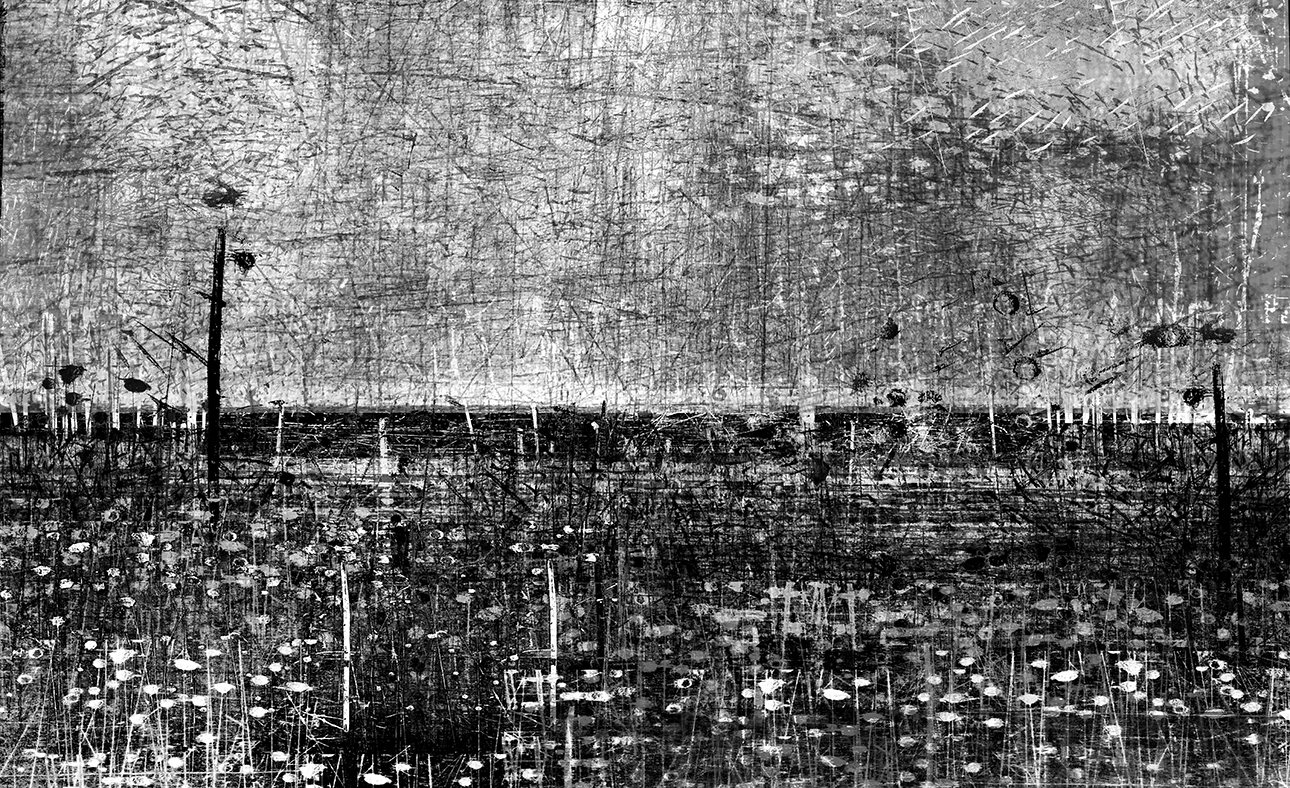
Winter Break Wyoming
Lithograph
22”x30”
2023
The Interview
Blake Sanders: How were you first introduced to printmaking? Was it love at first sight (carved/drawn/engraved/squeegeed mark)?
Brian Kelly: The love for printmaking was love at first sight but, for a long time it played second fiddle to my dream of being a ski patrol.
I was first introduced to printmaking by my father. When I was in first grade he brought home a box of typesetting blocks, some ink, a small roller, and a roll of paper from the printing division at his work. I remember spending countless hours stamping those images and letters onto the paper my father gave me. My parents continued to expose me to printmaking while I was a kid by enrolling me in after school printmaking classes at the local art center until I got into high school and even buying me a potter proof press for my 14h birthday.
The high school I attended, Rolling meadows high school, was a public high school that really focused on the arts. It was here that I was really exposed to all aspects of printmaking (lithography, intaglio, relief, and silkscreen). My high school teachers were printmakers with MFA degrees in printmaking. They were all connected to the printmaking program at Northern Illinois University and David F. Driesbach, along with the Chicago artist group the Hairy Who, printmakers Robert Nelson. Warrington Colescott, John Doyle, Jim Pink, and many others. In high school my dream was to move out west and become ski patrol –I started skiing very young and I was not very good in classes outside of art– and I thought that was going to happen after I took the ACT and received a total score of 12 on that test.
My high school printmaking teachers and father had a very different plan for me. In high school, at the start of the MLB baseball season, my father would call me in sick and take me to cubs games. When I was a senior and shortly after receiving my ACT score my father told me he was going to take me to a cubs game to help me forget about the ACT. The next morning we drove into the city and my father pulled up to the front of the School of the Art Institute of Chicago. This was not uncommon since we many times would visit the museum before going to the ball game. After getting out of the car I was met by my father who had a portfolio of all my prints given to him by my high school printmaking teachers. My father told me that I needed to take my portfolio and show my prints to the schools attending the national portfolio day that was being held at the SAIC that day. My father handed me the portfolio, told me he would be back in a couple hours, and then drove off. So, knowing my plans to become a ski patrol were being challenged I went into the SAIC. Once inside, I looked for the school that had the longest line of students thinking that if I found the longest line I would never have to show my portfolio to anyone and not only get to the Cubs game but also avoid college and get closer to my dream of being a ski patroller. A long story short…I was in that line for about 45 minutes and then all of a sudden that single long line turn into 4 short lines. It appeared that the long line formed because the 4 faculty at the recruiting table were at lunch.
So, after about an hour a waiting I was face-to-face with a gentleman by the name of Jerry Mayer. Jerry started looking through my portfolio along with the other 3 faculty at the table. The review lasted about 20 minutes of looking at my prints, talking about my high school experience, and about making prints. At the end of the review Jerry said he had one last question for me, and that question was “do you plan on going to college?”. I told Jerry that I was not and that my ACT score was pretty bad but, I really wanted to be a ski patroller. Jerry then said, “well, you could always be a ski patroller but, your work is very strong, I think you would do well in art school, and we have a “very” good printmaking program that you would love”. I looked at him and said “well my ACT score was really bad and I really love to ski”. Jerry, unfazed and with a straight face, asks me if my score was double digits. I gave jerry my ACT score, he took my contact information, and asked me one last question…”if your were to go to college, would you take it seriously? Of course I said yes. Three days later, I received a call from Jerry and he told me that he not only to he get me accepted into college but the school would also be giving me a full 4-year art scholarship to attended. That school was NIU.
It is an amazing story and the crazy part was I only went to one table on that day and it was NIU’s table completely by chance. After I signed the acceptance paperwork my high school teachers told me about the history between the NIU printmaking program and the high school art program I was part of. I feel, during the 3 days, there were probably a number of phone calls made between both schools along with one with David Driesbach. It is a long story but, it certainly laid the ground work for the teaching philosophy I have.
While at NIU, David Driesbach (and his wife Maggie), Robert Bornhuetter, and Dorothea Bilder all took me under their wing, made sure I was always in the printmaking studio, always around the printmaking graduate students, brought me to there personal studios to show mw how an artist works outside of the university, gave me shop monitor responsibilities, made me work at the same tables that they made their work at, made sure I made the right choices and held me accountable, and made me play chess with them weekly. In my last year at NIU David asked me what I was going to do after graduation and I told him I wanted to move west and become a ski patrol. David told me I could always be a ski patrol and should consider going to graduate school, be a teacher and artist. As you might guess, my path to undergraduate school was about to repeat its self.
Back then there was no internet so, looking for graduate schools was very different. So, one day while playing chess, Driesbach hands me a letter and says this letter came for you. I took the letter, opened it, and started reading. The hand written letter was from Kimberly Arp and it was encouraging me to apply to LSU for graduate school. There were ties between NIU and LSU. Jim Burke knew Driesbach, they both studied with Lasansky at the University of Iowa and Driesbach’s son and Kimberly were friends and both were in the graduate printmaking program at Indiana University together – see question #2 below…
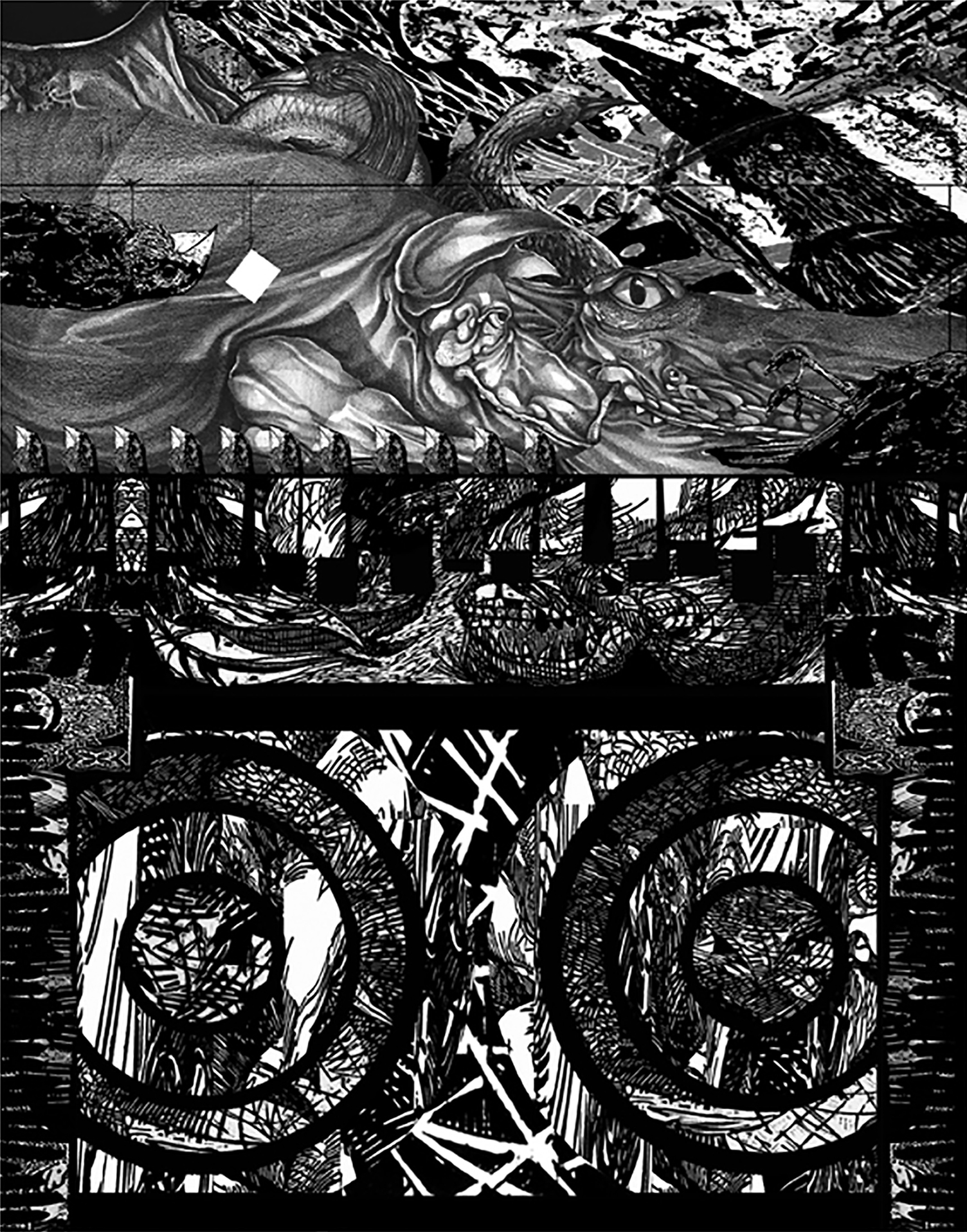
Observer
Lithograph
30”x22”
2018

Sign Post
Lithograph
22”x30”
2024
BS: You got your BFA at Northern Illinois and have always struck me as a midwesterner, am I right? What sticks with you from your at NIU, and how did you decide to attend LSU for your Masters?
BK:
I was accepted into a lot of graduate programs. I decided to attended LSU for graduate school for a few reasons:
- The amount of the assistantship that LSU was offering and the low cost of living allowed me to attend school without having to have a job.
- I knew Kimberly had studied with Rudy Pozzatti and JB (Jim Burke) had studied with Mauricio Lasansky. That was important to me.
- One of my teachers at NIU was Mark Nelson (the son of Robert Nelson https://www.artworkarchive.com/profile/van-every-smith-galleries/artist/robert-a-nelson) an important American printmaker at the time who was a big influence for me. Mark told me to talk to his father who had been a visiting artist at LSU before Kimberly had arrived. Mark told me to call his father and ask him what he thought about the idea of going to LSU for graduate school. I called Robert and he said the printshop had no A/C and it was located right next to the ceramic studio that made it impossible to do litho. He said without a pause…”stay away from LSU and any of the 5 other choices would be better”. I went back to Mark and I told him what his father had told me; Mark’s response was…”Ugh!! I never listened to my father and always did the opposite of whatever he said…Go to LSU!).
- Robert Bornhuetter, my litho professor at NIU, received his MFA in Printmaking from Tulane University and studied with James Steg. Bob thought going to grad school “far” from Illinois would be a good idea.
- Maybe the thing that really sealed it for me was a conversation with David Driesbach while playing chess. David and I played every week and during a game David handed me a sealed letter. The letter was addressed to me and it was from Kimberly. Inside the envelope was a hand written 2-page letter from Kimberly. He talked about hearing about me, my work, the reputation of NIU, the LSU program, and asked me to apply to the LSU program. Off the record…the letter had misspellings throughout and as someone who grew up with dyslexia, I not only appreciated the hand written letter but also the misspellings. In hindsight, it could have been his messy handwriting….but, probably not. That letter from Kimberly meant a lot and was the start of a 34-year friendship.
Moving to the south was a complete culture shock as it is probably for everyone. The heat, the bugs, the lack of a real fall and winter season, the lack of art/printmaking supply stores, the lack of support for art, and the then the politics, when I came to Louisiana is was all about David Duke and Edwin Edwards, etc. and now Landry, Space X, etc.…UGH!!
But, what I did find to my surprise in graduate school was a large transplant of Midwestern printmaking professors who had studied with Willam Stanley Hayter, David Driesbach, Rudy Pozzatti, Mauricio Lasansky, and Abner Jonas. I also found myself part of a large printmaking graduate program of 10 students from all over the world working within a program rooted in print tradition. Jim Burke and Kimberly had/were building something extremely special and that printmaking environment was life changing for many of us.
The Louisiana printmaking community then was amazing. The printmakers working and teaching in the state were John Scott (Xavier University), Addie Dawson (Southern U.), James Steg (Tulane), Bill Kitchens (Loyola U.), and Anita Jung, Tom Christison and Gerry Wubben (McNeese). All people that I interacted with as a graduate student and early on when I started teaching.
The current strength of the printmaking community in Louisiana is that it is built upon the shoulders of the Midwestern programs–therefore it has become an extremely tight knit family. Much like the standard Louisiana family, the Louisiana printmaking community is an extremely close and supportive community. The closeness of this community has kept me in Louisiana. I don’t know anywhere else where I could find a community that if I need a bottle of plate developer I could just call LSU, McNeese, Nicholls, Tulane, Loyola, or Southeastern and they would help me out and vice versa.
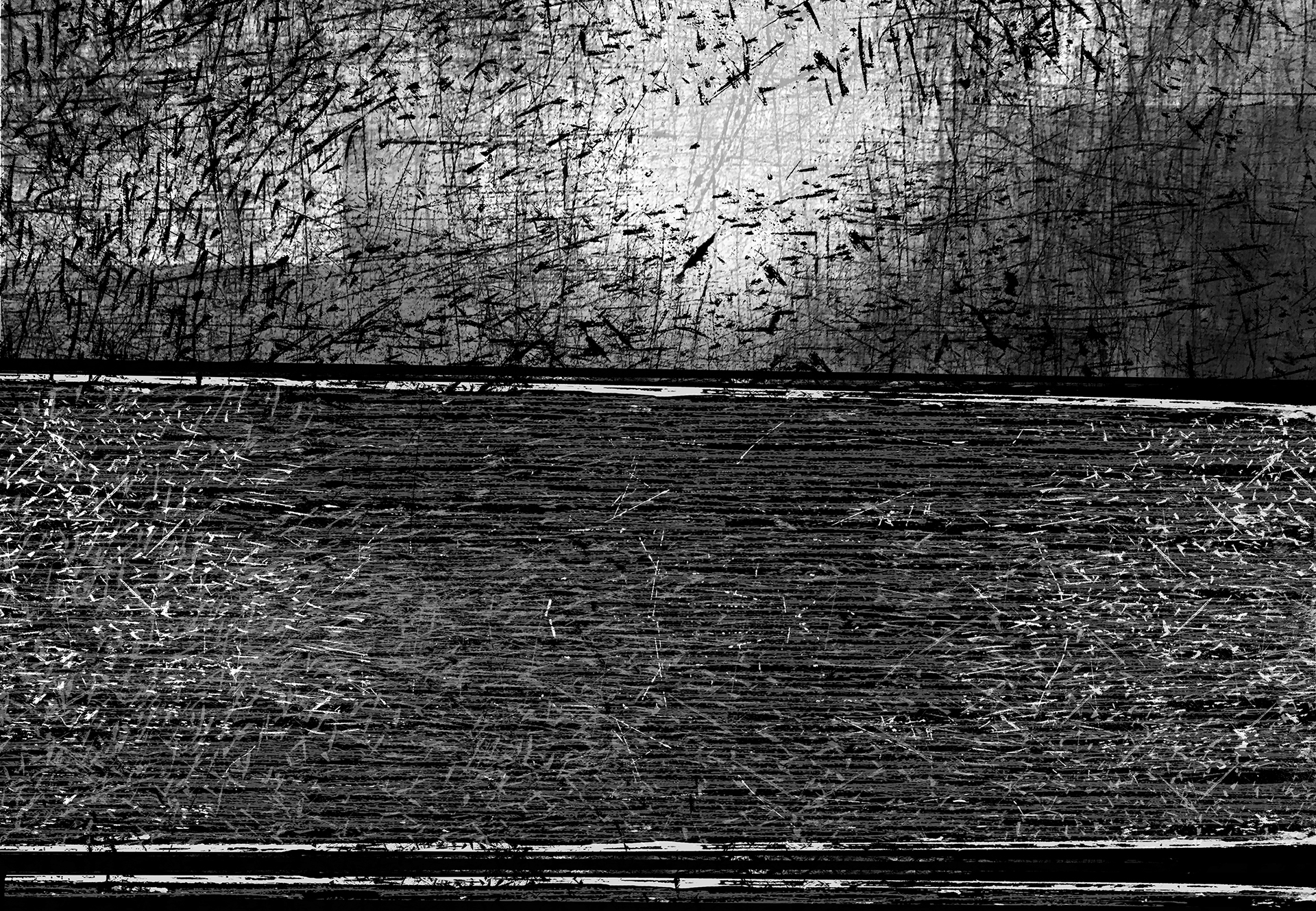
Crowley
Lithograph
22”x30”
2026
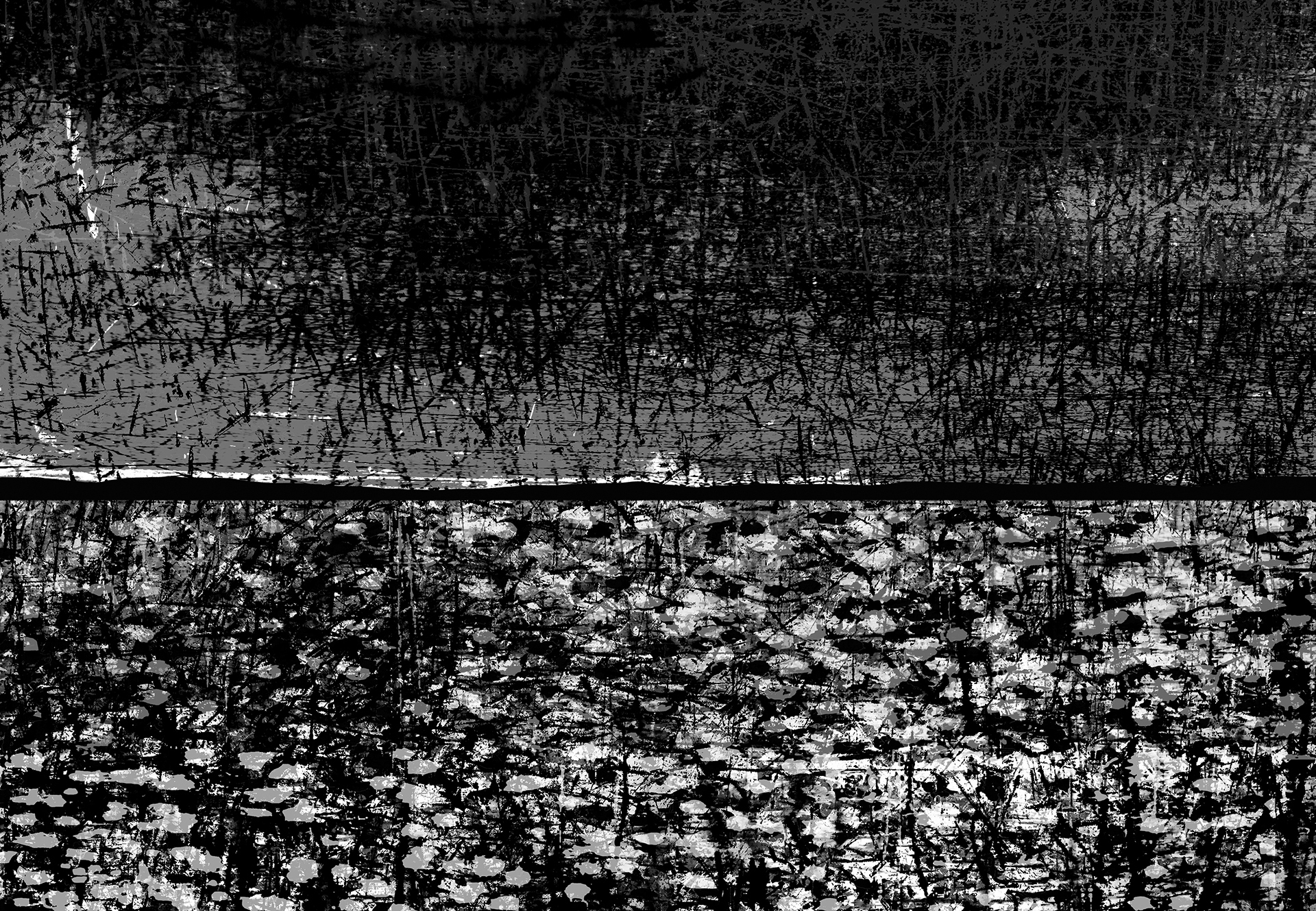
Hell Gate Wind
Lithograph
22”x30”
2023
BS: LSU has quite a track record of producing great printmakers and print educators. Who were your peers when you were there? How did that program set you on the course of your creative and teaching career?
BK: Peers during my MFA time at LSU were Jim Bryant, Peter Walls, Karoline Schleh, Stanley Kiminsky, Massimo Bouccuni, Peter Yearworth, Larry Giacoletti, Neil Barr, Ben Rinehart, Minda Douglas, Johanna Pass, Angela Nichols, and Neil Daugherty. After graduating in 1995, I started teaching at Southeastern Louisiana University (1996-1997) and during this time still maintained an active presence and contact with the LSU printmaking shop and was also around Sandra Smithson, Duane Johnson, Sean Star Wars, Andrew Saluti, Katherine Hunter, Emily Cook, Renee Smith, Ryan O’Malley, Matthew Bourgeois, Lee Simmons, and Ryan Limburgh. In 1999, I started teaching at the University of Louisiana at Lafayette and later became Director of the School of Visual Arts from 2004-2017. During this time my contact continued and LSU Printmaking graduates May Babcock, Katherine Hunter, Rebecca Kreisler, Jessie Hornbrook, and Hannah Sanders all had adjunct teaching roles in the School of Visual Arts at UL Lafayette.
Looking back at all the individuals that I was around between 1992-2017 it is amazing to see how their careers have unfolded. All of them are still artists with active professional studio production, they are all either university professors, professionals within the art museum and gallery world, or professional artists. It is just amazing and is evidence of the continued strength of the LSU Printmaking program. I could easily include the graduates from the program before my connected time with the program and certainly to the current graduates.
When I was at LSU both the educational and shop philosophy were very much the same that David Driesbach had instilled at NIU and both followed much of what Lasansky embraced and stressed at the University of Iowa. Kimberly and JB fiercely believed that rigorous craftsmanship should not stifle creativity; rather, mastery of technique served as the necessary foundation for print production. They believed and made sure we were working within what Lasansky called the “Workshop Approach”. This is a room/studio that is setup to be an open, democratic workshop. Kimberly and JB made sure the lines between the undergraduate and graduate students would be blurred, allowing students of different experience levels to constantly learn from and challenge each other. Kimberly focused heavily on individualized, one-on-one critique. He had an uncanny ability to pinpoint exactly what an individual student needed for personal artistic growth without imposing his own aesthetic preferences. Kimberly constantly reminded us of the power of the print medium for profound personal and social expression. He pushed us to use our own life experiences to dive headlong into our work and create images that would burn into the viewer’s memory.
Through this philosophy, like Lasansky and Pozzatti, Kimberly prepared a generation of students who went on to take over printmaking programs in colleges and universities across the country as well as move into careers in the visual arts.

Rocket Police and Flash Gordon Go To UAB
Lithograph
30”x22”
2021
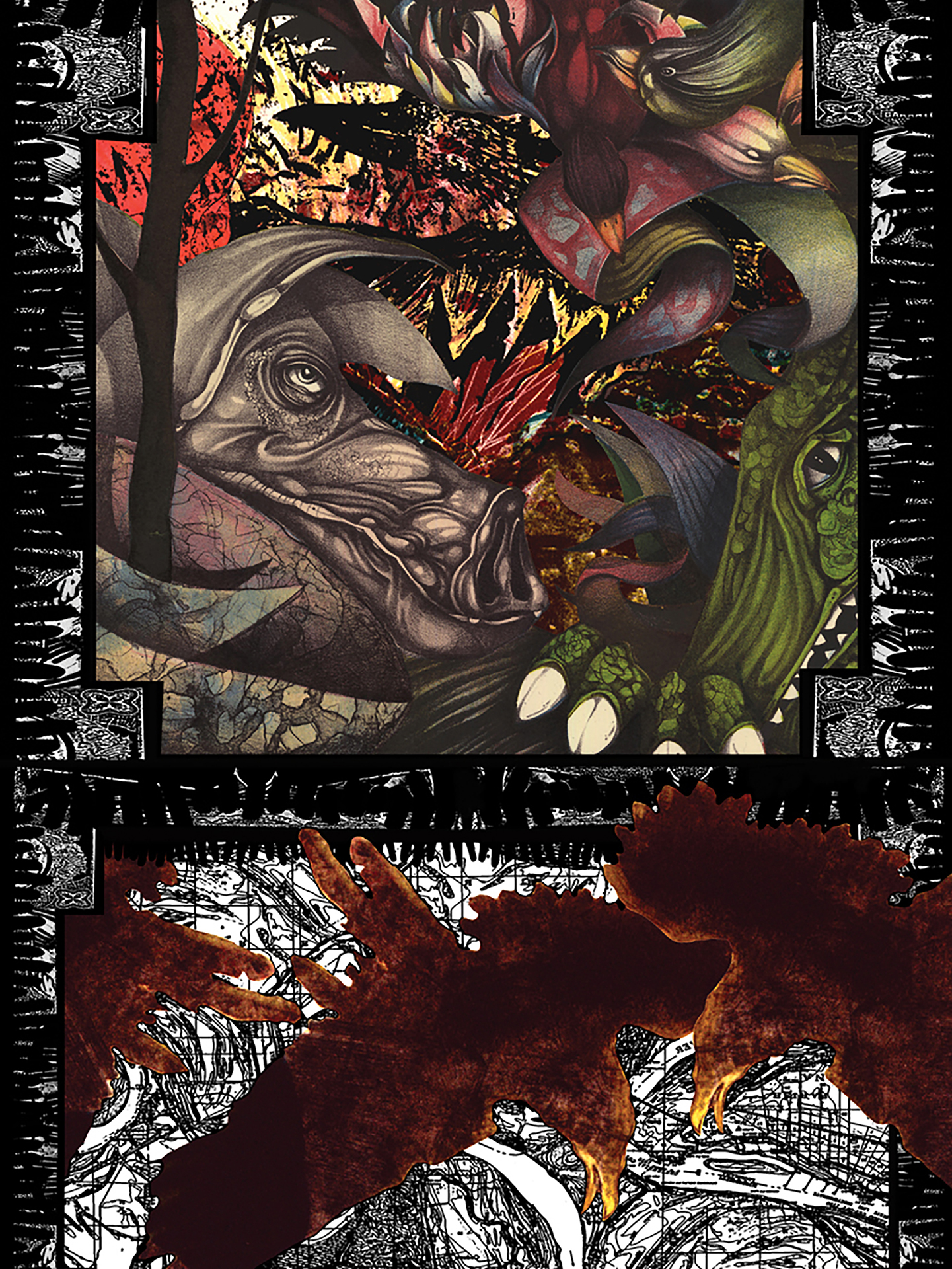
Larmar Migration
Lithograph
22”x30”
2020
BS: You have been at University of Louisiana Lafayette for many years. Your students are immediately recognizable at Open Portfolios. The drawing skill, crowded dynamic compositions, and refinement of their lithographs in particular clues me in that they’ve worked with you (and likely David DuBose in drawing). What’s your secret? How have you built this culture of excellence in the studio?
BK: I am not sure I have a teaching secret? But, the core of my printmaking teaching philosophy mirrors the printmaking education I received in high school, at NIU and LSU. There is probably not a day that I do not use something I learned from David Driesbach or Kimberly in the classroom. I stress drawing, the use of the visual language, accountability, and community. When teaching, I am always focused on the now while always having my eyes on what is next and for the individual student allowing me to stay ahead and guide the student through a seamless adjustments and guidance.
I also recognize that young printmakers, like gardens, do not grow by themselves, and teachers assiduously tend to the day-to-day business of managing classes and that successful teaching requires constant adjustment, flexibility, commitment, and rolling of personal research into one’s teaching. Additionally, the importance in the students’ understanding of the difference between technique development and conceptual development and the importance in the relationship that is required between the two in the development of a print or body of work.
I firmly believe in hard work, strong studio discipline, high expectations, and showing students how to develop creative processes that focus on the production of bodies of work along with deliverables within a “real” student-centered teaching and learning environment. I believe that a student needs to learn how to develop ideas and research skills that support those ideas. I believe students need to learn how to take risks and also develop a belief that the evolution of a body of work, like the artist, is a long journey and conversation with oneself that requires patience. I believe the lines between the introductory and advanced students should be blurred, allowing students of different experience levels to constantly learn from and challenge each other. I believe in individualized, one-on-one critique while a student’s work is being developed and the importance of developing focused well researched bodies of work over the focus and/or development of individual project based assignments.
Like those who taught me, I also believe in the “Workshop Approach” to the running of a printmaking studio/classroom that is open and democratic and that introductory and advanced students should share space and ideas. I believe in the celebration of student outcomes and the development of the individual student’s personal artistic growth without imposing my own aesthetic preferences.
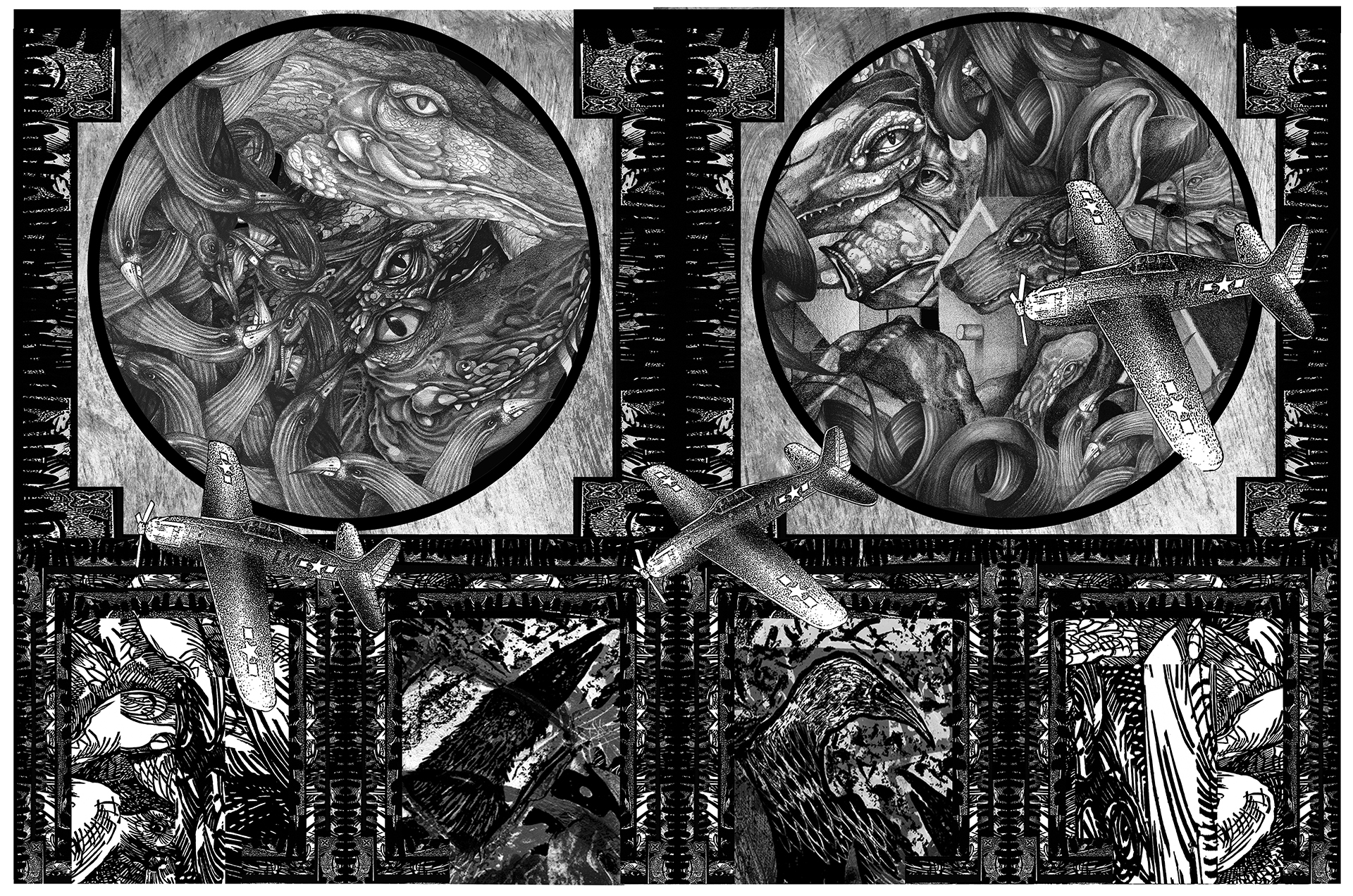
Drain the Swamp: The Quest to Kill Obama’s Legacy
Lithograph
22”x30”
2020
BS: You are the Coordinator for Marais Press at UL Lafayette, a fine art press that publishes a number of artists a year. How was Marais established and what do you offer your collaborators? How do you recruit and maintain relationships with your artists?
BK: I established Marais Press in 1999 when I got to UL Lafayette. From 1997-99 I taught at Southeastern Louisiana University. Part of my service responsibilities was the oversight of the Department’s Iris Printing Lab. In collaboration with the College’s Culture Resource Management program I initiated artist collaboration projects with a number of artists throughout Louisiana. For almost all of these artists it was the first time they had ever used/had access to computers or made a print. An additional aspect of my role overseeing the lab was to develop curriculum ties to computer technologies. This took the form of designing the department’s first hybrid art education course as well as the integration of alternative/computer printmaking applications within the printmaking curriculum. All of these experiences laid the groundwork for what would become Marais Press.
When I arrived at UL Lafayette in 1999, I was responsible for the rebuilding of the printmaking program from the ground up that included its facilities and curriculum. I developed Marais Press to add aspects of professional development, student service learning experiences, and community outreach programs to the printmaking curriculum.
Four to nine artists are invited to Marais Press to produce printed editions, present workshops, and give public lectures each year. Artists typically spend anywhere from 3-7 days working with the press in the publication of printed editions. Over the last 27 years Marais Press has worked with over 200 local, regional, national, and international artists from throughout the State of Louisiana, the United States, Canada, Brazil, England, Mexico, Ireland, and France. In addition, exhibitions of Marais Press publications and print projects have been mounted at universities and art centers throughout the United States and Canada.
Artists come to Marais Press through personal invitation, are also referred to Marais Press by Museums and Galleries, by recommendation, and through direct communication from the artists. Relationships with artists, museums, and collectors are developed and maintained through the help of the UL Development office, the UL Hilliard Art museum, The UL College of the Arts, and me personally.
The following are programs that Marais Press maintains:
Marais Press Visiting Artist Residency Program
The Marais Press Artist Residency Program will invite applications for artist collaborations with Marais Press. Four guest artists will be selected to participate in two-week residencies in the workshop, each working with a team of student printers under the close supervision of Marais Press’s Master Printer. Participating artists will create one or two print editions as outlined by a Call for Proposals, with the printers providing guidance on the materials and all technical aspects of the printing process. In exchange, the resident artist will provide Marais Press three works from their residency and the sale of these works will help fund future residencies.
Marais Press Louisiana Visiting Artist Residency Program
The Marais Press Louisiana Visiting Artist Residency Program will invite applications for art collaborations with emerging Louisiana artists. This program will provide “early career” artists professional development and production opportunities. Four guest artists will be selected to participate in two-week residencies in the workshop, each working with a team of student printers under the close supervision of Marais Press’s Master Printer. Participating artists will create one or two print editions as outlined by a Call for Proposals, with the printers providing guidance on the materials and all technical aspects of the printing process. In exchange, the resident artist will provide Marais Press three works from their residency and the sale of these works will help fund future residencies.
Marais Press Louisiana Student Visiting Artist Residency Program
The Marais Press Louisiana Student Visiting Artist Residency Program will invite applications for art collaborations from current graduate students enrolled in a Louisiana MA or MFA Visual Arts program. This program will provide current graduate students access to professional development and production opportunities. One graduate student will be selected to participate in a two-week residency in the workshop, working with a team of student printers under the close supervision of Marais Press’s Master Printer. Participating artists will create one or two print editions as outlined by a Call for Proposals, with the printers providing guidance on the materials and all technical aspects of the printing process. In exchange, the resident artist will provide Marais Press three works from their residency and the sale of these works will help fund future residencies.
Marais Press Louisiana Post-Graduate Visiting Artist Residency Program
The Marais Press Louisiana Post-Graduate Visiting Artist Residency Program will invite applications for art collaborations with skilled student printers from current post-graduates from a Louisiana undergraduate or graduate visual arts program. This program will provide current graduates access to professional development and production opportunities. One artist will be selected to participate in a two-week residency in the workshop, working with a team of student printers under the close supervision of Marais Press’s Master Printer. Participating artists will create one or two print editions as outlined by a Call for Proposals, with the printers providing guidance on the materials and all technical aspects of the printing process. In exchange, the resident artist will provide Marais Press three works from their residency and the sale of these works will help fund future residencies.
Marais Press Contract Printing Program
The Marais Press Contract Printing Program will be a program in which the artist, museum, or gallery will assume all publication costs of a project. This program will allow artists who are able to obtain support for project publication costs through research grants, community foundations, or through the galleries or museums that represent them. These Co-publications will be by invitation only and on a contract basis. In this program Marais Press student printers will collaborate with artists from artistic conception through editioning. This program will provide artists, gallery owners, and independent publishers the ability to publish their own fine art prints. This program will also allow organizations the ability to publish projects that can be used to generate funds for non-profit organizations; other projects create valuable inventory for galleries and artists.
(In Development) Printmaking United States: A Bi-Annual Marais Press Juried Exhibition
There is an opportunity to develop and organize an annual national printmaking juried printmaking exhibition. These types of national exhibitions hosted by universities were very common in the 1980-1990’s. Currently, there is “not” such an exhibition running in the United States. This type of exhibition can not only bring in revenue for Marais Press but it could also serve as the foundation for an annual printmaking symposium, serve as a mechanism for the raising of sponsorship funds, and provide another avenue for building the national reputation of Marais Press, the School of Art, College of the Arts, and Fletcher Hall Gallery.
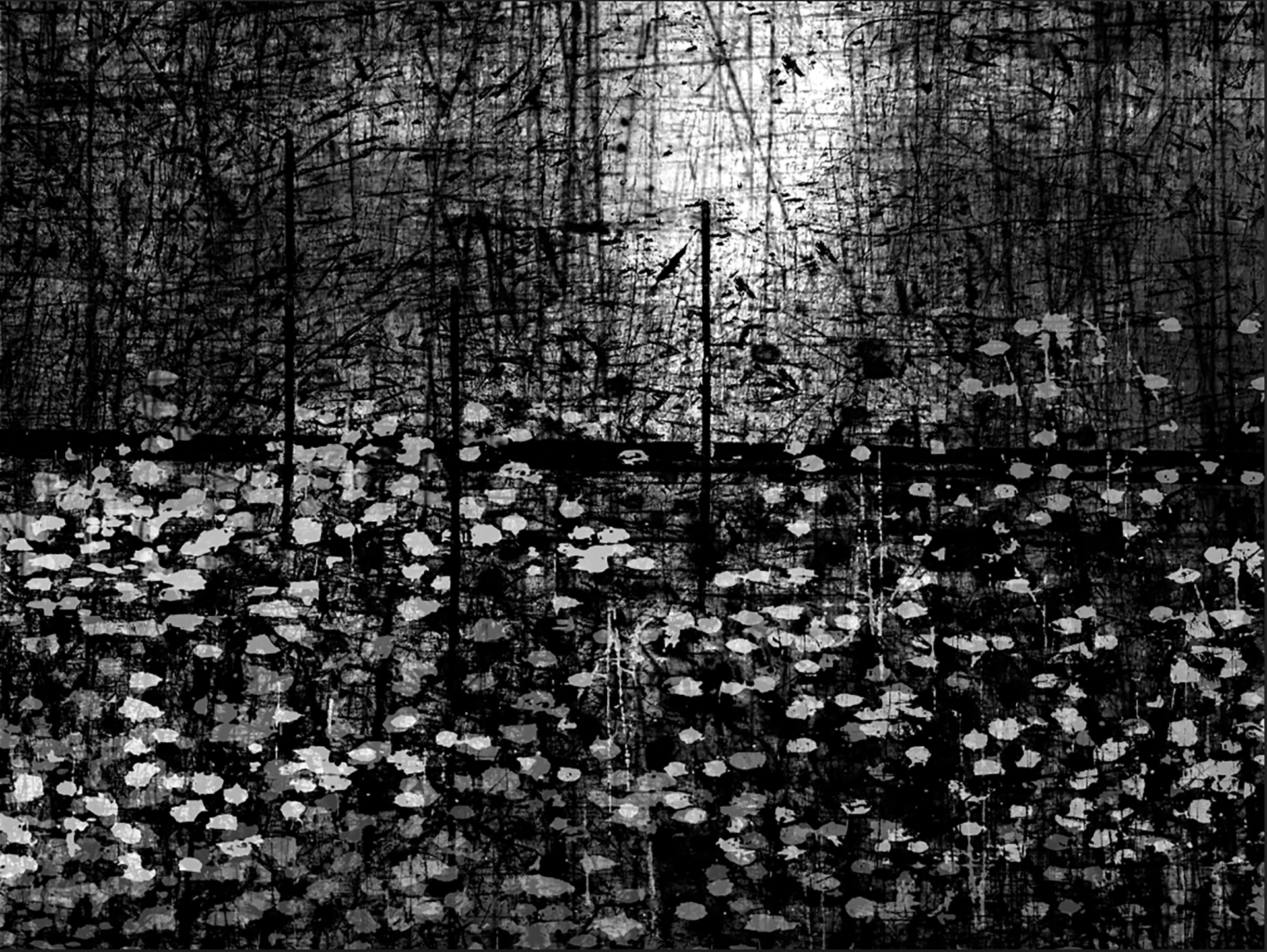
52.36940 N, 4.90120 E
Lithograph
22”x30”
2024

DeKalb Homecoming: Candy Crow
Lithograph
30”x22”
2016
BS: How have you integrated the Marais Press experience, and the expectations of a collaborative fine art print relationship, into your teaching?
BK: Marais Press was established in 1999 under the coordination of Professor Brian Kelly. Marais Press is housed within the School of Visual Arts at the University of Louisiana at Lafayette and is committed itself to both the teaching and research of alternative printmaking techniques and the embracing of collaborative research exchange between the University institution and the printmaking and artistic communities.
Marais Press offers an extraordinary educational experience where undergraduate students within the School of Visual Arts collaborate with Professor Brian Kelly to create research and promote printmaking by internationally and nationally renowned artists, for art agency’s and museums within the state of Louisiana, as well as professional printmaking organizations within the United States. As the only university collaborative press in the State of Louisiana, Marais Press offers an exceedingly rare environment for pushing the boundaries of service learning projects and printmaking education within a university environment.
Marais Press embraces the University of Louisiana at Lafayette’s mission in developing leaders and innovators who advance knowledge, cultivate aesthetic sensibility, and improve the human condition. To support the University’s mission and its strategic imperatives related to students, Marais Press embraces and provides an environment that supports student service learning projects that focus on teaching, research, and public service as well as the cultivating of a student body that is intellectually curious and civically engaged by developing an infrastructure that ensures student success.
All Marais Press student learning projects provide experiences that focus on teaching students the necessary skills for printmaking, undertaking research into new and traditional printmaking techniques, along with involvement in collaborative print production, the conducting of outreach programs, along with projects that help educate the public about art in general, and printmaking in particular.
Marais Press has partnered with the Arprim – Centre d’essai en art imprimé in Montreal Canada, the Southern Graphics Council International, the New Orleans Center of Contemporary Art, the Baton Rouge Arts Council, the Hilliard Art Museum, The Acadiana Center for The Arts, the New Orleans Art Museum, the Hammond Regional Arts Center, Loyola University in New Orleans, among other organizations and universities in providing community outreach.
Marais Press was created to ensure a continued leading role in UL Lafayette’s rich printmaking tradition. To do this, Marais Press adheres to the philosophy that students must play integral roles in its professional collaborations. Since 1999, over 200 students have been involved in working on projects at Marais Press where they have alongside Professor Kelly in the collaboration with professional artists in the production of printed editions and projects within Marais Press.
Marais Press provides students an opportunity to work in an investigative environment where students are able to learn different modes of artistic inquiry, problem solving, and visualizing alongside visiting artists. Students have an opportunity to work and develop research with new and alternative printmaking techniques and processes as well as traditional processes. The end result of this collaboration is the production of a completed printed edition, or body of work, and provides students with real hands-on experiences that are marketable in both the collaborative fine art and commercial printing environments.
The Paul and Lulu Hilliard University Art Museum at the University of Louisiana at Lafayette is the official archive for Marais Press, and receives one print from every edition or print portfolio project that is created. Prints and print portfolios that have been created and organized by Marais Press have been include in university museums collections throughout the United States, including the New York Public Library, The United States Library of Congress, Zuckerman Museum of Art, Old Dominion University, Larmar University, The University of Colorado, University of North Dakota, University of Central Florida, University of North Carolina at Pembroke, The Museum of Texas Tech University, Louisiana State University, The UL Lafayette University Art Museum, among others.
Marais Press has published more then 150 artists that included; David Driesbach, Rudy Pozzatti, Sue Coe, Micheal Ray Charles, Chakaia Booker, Sam Reveals, John Hitchcock, Noel W. Anderson, Eric Avery, Ke Francis, Carmon Colangelo, Warrington Colescott, Neil Shawcross, Lynwood Kreneck, Ashley Nelson, James Bailey, John Hancock, Elemore Morgan Jr., William Kitchens, Lloyd Menard, Robert Bornhueter, Richard Peterson, Xenia Fedorchenko, Lucy Turner, Tim High, Michael Barnes, Debra Cornell, Bob Tannian, Dave Menard, Sean Star Wars, Claude Arseneault, Harlan Johnston, Ben Rhienhart, David Dubose, Brad Windness, Ernie Ken Baskin, Krathlyn Hunter, Kimberly Arp, Robert Russett, Garred Cannon, Gerry Wubben, Bradlee Shanks, Nichole Hand, Jim Burke, Keth Howard, Debra Cornell, among others.
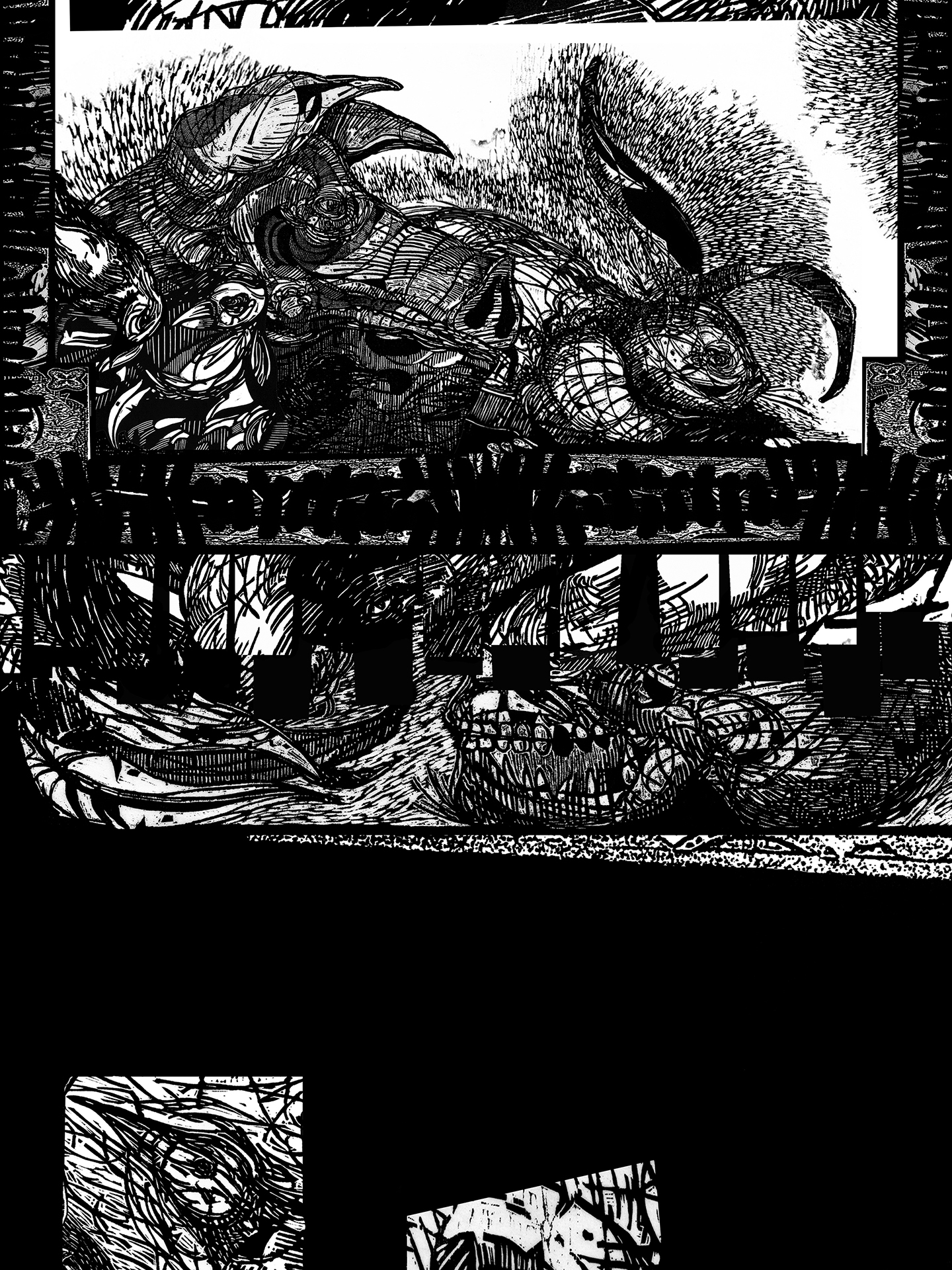
Imprudence
Woodcut
20”x16”
2014
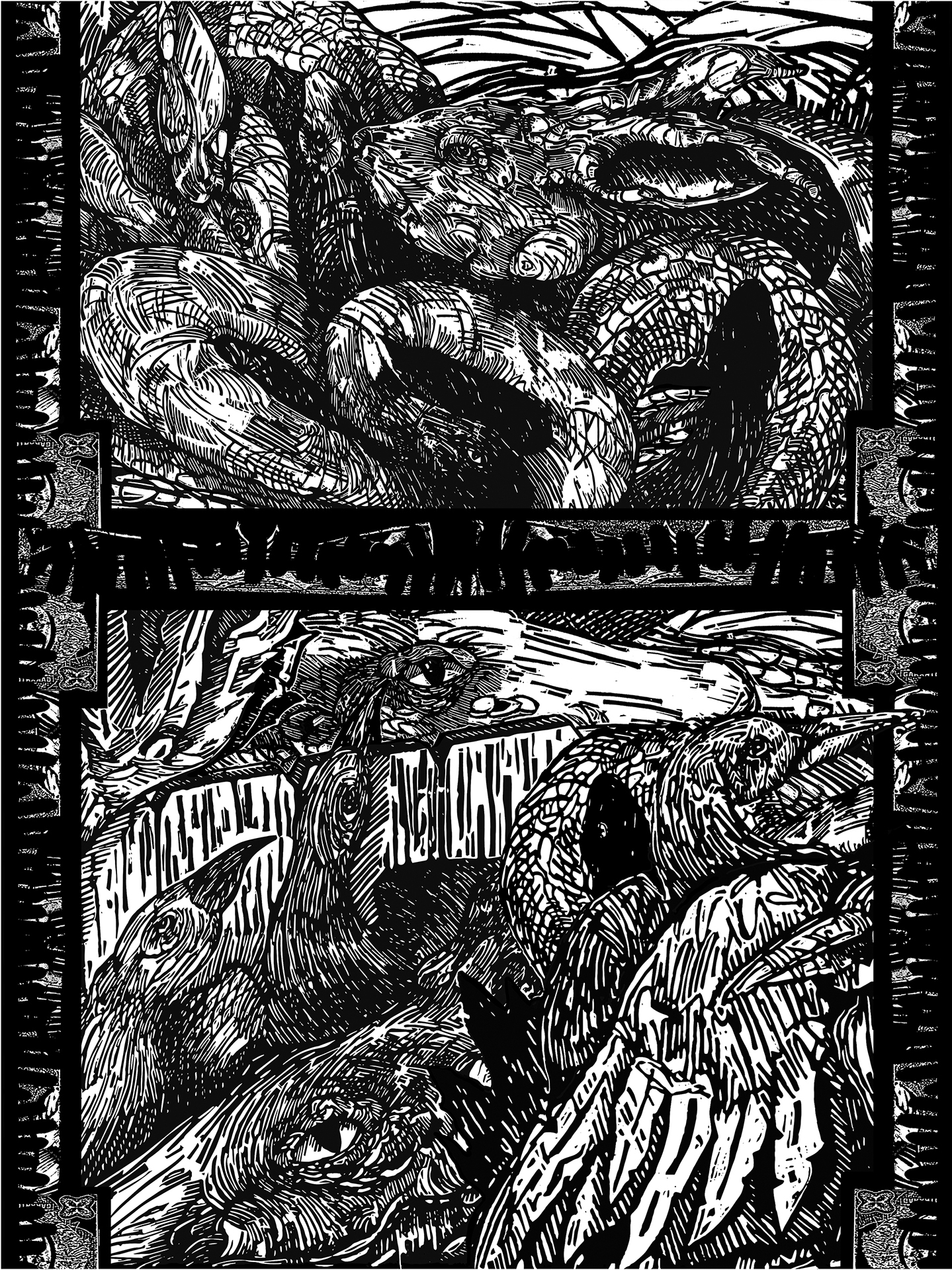
Fence Wars
Woodcut
20”x16”
2020
BS: Your own work, no matter the finished product, is informed by a collage process. How do you integrate an aggregate composition into lithography and relief that have their own hand rendered aesthetics?
BK: As a student I enjoyed working in all 4 of the major printmaking processes. I also was very interested in the combination of those processes but. I was not interested in the physicality and surface that was a byproduct of a physical college processes. I was interested in a seamless integration of a surface rather then a manipulated surface that was a result of the hand. I was interested the creation of a seamless world that the distinct voices of woodcut, intaglio, lithography, and silkscreen could coexist.
This saw/see this integration of processes/identities was a metaphor for personal experiences of being the youngest within a large family, growing up and going through the K-12 education system in the late 70’s with learning disabilities, and living with severe social anxiety. The need for a seamless surface within the print was important to me and my need to talk about ideas such as inclusion and the last of inclusion. It was a technical problem that eluded me until my first teaching position at Southeastern Louisiana University (SLU).
At SLU I taught all levels of printmaking, basic drawing and design, along with overseeing the department’s IRIS Print Lab. It was here that I learned how to use Photoshop 1.0 and also started to learn how to integrate both alternative printmaking processes associated with the Intaglio Type, Image-On Film, Solar Plates, and the integration of computer technologies into traditional printmaking processes.
When I arrived at the University of Louisiana at Lafayette I continued this practice and developed a curriculum and printmaking studio that embraced both traditional and alternative printmaking processes along with a focus on the integration of those, what many thought then, divergent ways of working and a source of contention within the printmaking community. I found this professional view point a parallel to issues of inclusion I was thinking about.
As for my process, I embrace both traditional ways of working within printmaking and those that are alternative. I am interested in making prints without the use of computer of photo based technology. This prints are made and they exist as they do – a lithograph, an intaglio, a silkscreen, a woodcut.
But, I am also interested in how those prints can be manipulated and how their context and meaning can be changed by their connection to both photo-based and computer technology. I explore this relationship as a means to bring together images created within divergent printmaking processes (lithography, woodcut, intaglio, and silkscreen) and surfaces with the goal of creating surreal worlds with renewed context within a new printed seamless surface. A surface in witch detergent marks, personalities, surfaces unite asking the viewer to consider how they were put or pulled together.
I do this by taking completed traditional prints and scanning them. I take these scans along with drawings and photographs of forms and objects with in the landscapes that I travel in and out of, in landscapes that I share with those close to me, and those that I work within. Those landscapes along with the manmade and organic structures found within them feed both compositional structure and rhythms and decisions within the prints. Once all the traditional prints are scanned they are brought into photoshop along with the landscape references. Within this temporal world images are colleged together creating surreal worlds that embrace both the abstract and representational and explore time and place along with specific experiences that are social, personal, and political in nature.
Once the images are created I print them onto clear films and then burn onto photo litho plates, silkscreens, KM Plates, or cut into wood with the use of a laser engraver. These plates are at ties printed alone, at times printed in relationship to each other, or I will create hand created layers to add to them working to an end result that is a seamless surface.
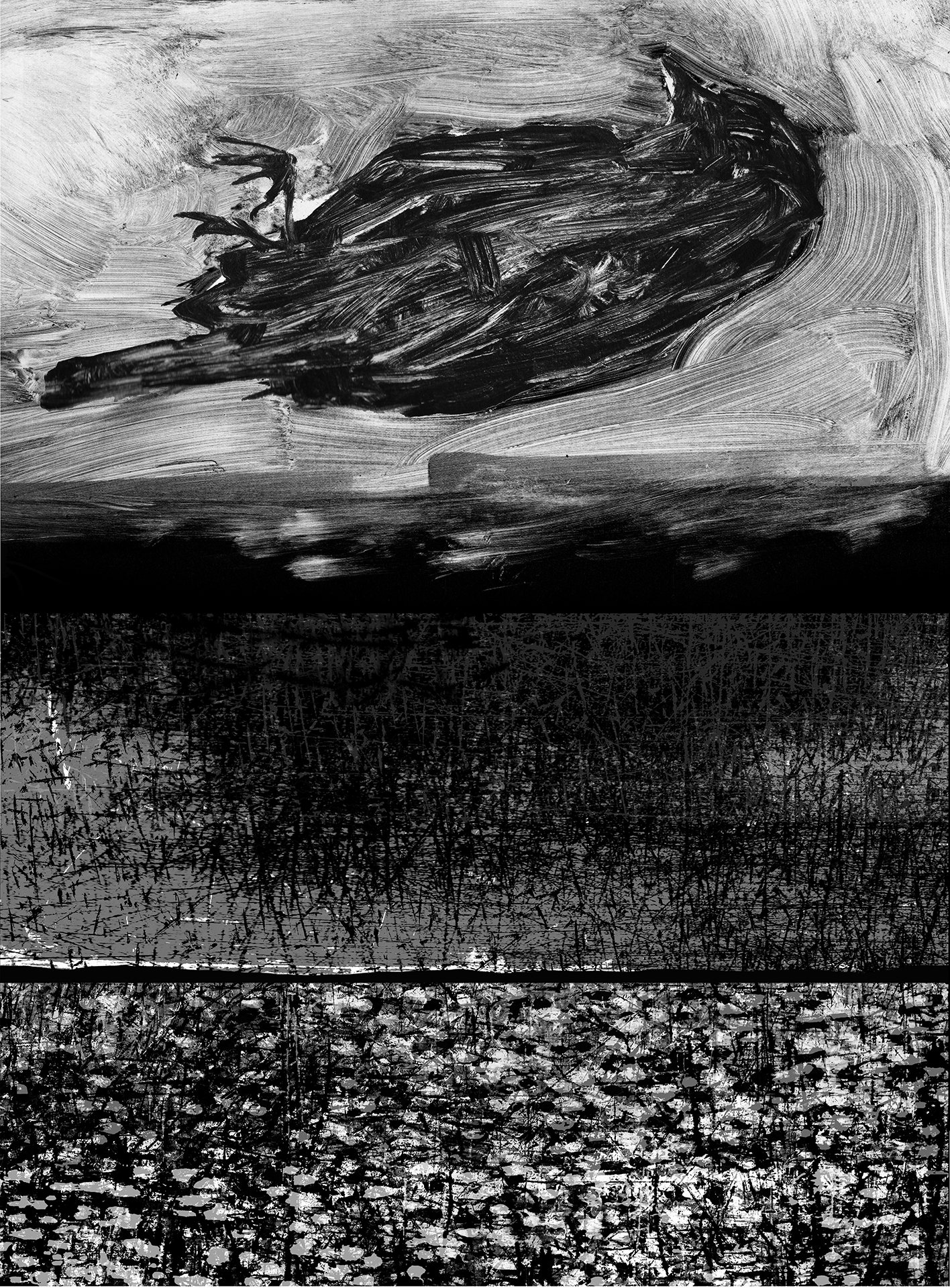
Storm on the Horizon: The Death of Pelican Island
Lithograph
30”x22”
2026
BS: You’re a long term member of the Baton Rouge Gallery, a cooperative gallery with active exhibiting members who help run the space. How does this relationship fuel your work? How does it complement your philosophy as a printmaker and educator?
BK: I have been part of BRG now for 30 years. I think being a part of a cooperative gallery allows for the opportunity for experimentation and risk taking within ones work. It offers artistic accountability and opportunities for cross-medium collaborations. Collaboration is a large part of my teaching, research, and creative process. For me collaboration serves as a platform for learning and pushes ones creative process. The process invites artists to step outside their comfort zones, learn, experiment, and create in ways they might never have imagined on their own. Being part of BRG allows opportunities to work with other artists invites us into a space of rich creative synergy. While it’s not without challenges – negotiating creative differences, coordinating communication, and balancing egos – the rewards can be substantial. Pooling resources and skills can foster opportunities for learning, artistic growth and creativity from diverse perspectives. I also feel great pride in being part of a collective that has a major cultural impact on the Baton Rouge community by supporting and providing educational workshops, youth programs, lectures, and workshops. Such initiatives support lifelong learning, proving that artistic discovery is not limited to any particular age group.
All of these experiences exciting and directly influence my printmaking practice and my teaching. I see both teaching, ones personal creative process, and collaborating/printing for an artist as a process of exploring techniques that best suit what the student and/or artist has in mind but, it also a conversation into the creative process that requires all to be open to new ways of doing things and be flexible in their approach (compromise). This process, can at times, produce results very quickly much like lighting in a bottle or it can produce great results or methods out of pure frustration. I see all of these within the process of teaching, collaborating with artists in the making of a print, or part ones personal creative process.
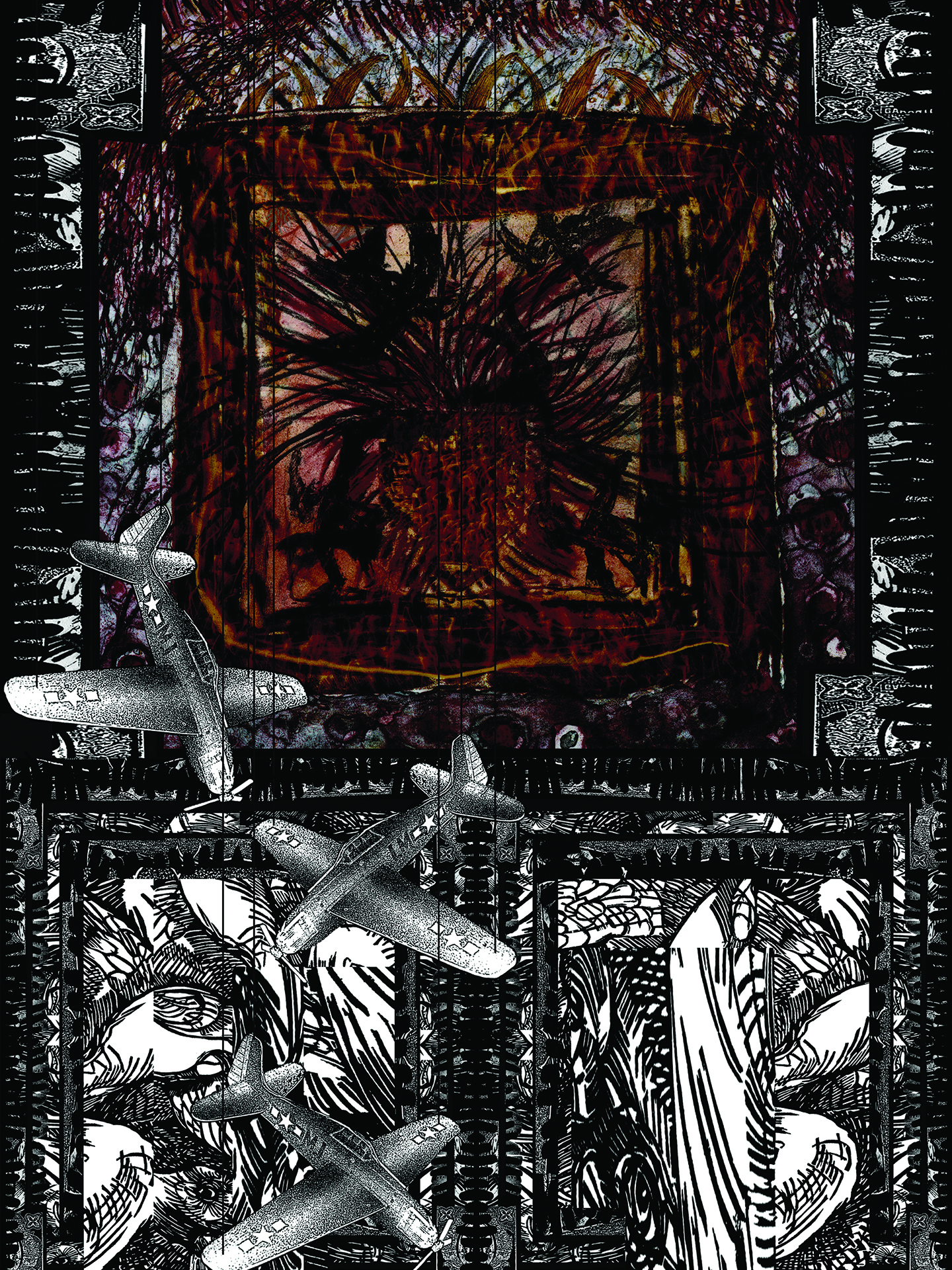
34-Year Orbit: Serpent Church Madonna Revisit
Lithograph
30”x22”
2026
BS: This is being published just a couple of weeks after the wrap of Printelligence, the 2026 MAPC conference in Baton Rouge. This marks the third national/international print conference you’ve been integral to organizing, and you’ve had many iterations of Louisiana symposia. Why do you keep coming back to this sort of service? Do you have any advice for print folk who want to get involved in organizing a conference? Any wisdom for the Steering Committee currently working on Confluence in Pittsburgh?
BK: I think printmakers are extremely social people “within” the printmaking environment. At its core, printmaking is about community and the dissemination of ideas. As a teacher, collaborator/printer for artists, and an artist, I believe in the access and sharing of ideas, information, facilities, and opportunities. It is what printmakers do so well and it is what makes the printmaking community so strong. Everyone feels the magic when the paper is pulled from a matrix with an image pressed into the paper but, for me, the real magic is the sharing of that moment with others. I see the pulling of the print as a catalyst that can create a life time of sharing and learning. For me it is what makes teaching print so exciting. I have the same relationship and excitement within the organizing of printmaking conferences/symposiums. Conferences/Symposiums are all about providing access to collaboration, access to the sharing of ideas, access to the opening of professional doors, access to the creation of dreams, and for me…maybe the most important…access to all of this for a student.
I think anytime I am involved in the shaping of a printmaking event I am always thoughtful of the very first SGC conference I attended. At that conference I remember meeting William Walmsley for the first time and him asking what color prisma color pencil I wanted him to sign a print with. I remember how nervous I was entering my print into my first SGC members exhibition (in the early days you did that with the real print when you arrived at the conference – nothing by mail). I remember how excited I was to be accepted into my first SGC members exhibition, how nervous I was when Loyd Menard walked up to look at my print, and how excited I was when he said it was one of the strongest in the exhibition and then inviting me into my first printmaking portfolio exchange. I remember sitting on a bus next to Garo Artrisen and how wonderful it was hearing him talk about printmaking and Tamarind. I could just go on-and-on with experiences that swung me from paralyzing fear to over-the-top excitement during that first conference. but, at the end of the day, all I felt as a young student -at the age of 20- was a sense of inclusion and a strong sense of belonging to a larger community. Printmaking conferences have that kind of power for both young and old printmakers.
My continued involvement with printmaking conferences/symposia is connected to the impact that they had on me as a student, as a young teacher, and as a printmaker, along with all the friendships that I have found. I tell close friends that “I found printmaking but, the community I found in printmaking saved me”. It’s important to bring students, faculty, and professionals together from different geographical areas who share a common interest in a discipline. It’s important for the preservation of the practice of the medium and the printmaking community.
With that in mind, I think the best advice I can give to the current SGCI Conference Steering committee is to remember the type of impact their first SGCI conference had upon them as a student and then later on as a professional. Print Conferences have to power to change people, build community, and disseminate ideas. For a student they can help set a trajectory for a lifetime of exploration and for the professional help sustain a career.
BS: Do you have any advice for newer printmakers just entering their SGCI experience? –AND–What do you have coming up you’d like to share with the readers?
BK: My advice for those just entering the SGCI experience, I would encourage them to do what my good friend Melanie Yazzie once told me…”Just show up”! Just show up and go to the next SGCI conference. Just show up and attended the next SGCI Virtual Event. Show up and apply or attend any of the SGCI opportunities and events that you can. Just show up and support your local gallery. Just show up and support the artists within and outside you network – Just Show Up and you will always leave changed.
As for upcoming activities, Marais Press is currently working on new publishing projects with Sue Coe, Kevin Brisco, and Louisiana artists Skylar Pham and Jesse Poimboeuf with all editions scheduled to be released at the end of the year and in the process of confirming publications to begin in the spring of 2027 that I am very excited about. Personally, I am working on a number of new prints and research to be presented during upcoming university visiting artist visits planned for this academic year, guiding a number of students through their senior thesis project, graduate school applications, and looking forward to a summer ski trip to Chile.